




Note: This webinar is open to everyone, but only members will have access to the recording.

Dr.Henk Kruse
Deltares Delft, The Netherlands
25th February 2026, 14:00 GMT (15:00 CET, 09:00 US EST)

Overview
Horizontal Directional Drilling (HDD) is the most used technique for trenchless installation of cables and pipelines. The HDD technique minimizes the impact of installation activities in densely populated and economically sensitive areas. Due to the presence of other underground infrastructure in the urban and industrial areas, it is necessary to ensure that HDD projects are carried out without damage to underground infrastructure. The available underground space for HDD projects is limited. Therefore, the design drilling lines for the installation of cables and pipelines are often optimized on the design drawings, and during the execution of the horizontal directional drilling, high accuracy demands are prescribed. Although the measurement systems that locate the position of the drill bit have improved considerably over the last decades, deviations from the design drilling line are still common. The deviations are part of the drilling process and depend upon the interaction of the drilling tools and the soil conditions. In sedimentary soils, a deviation analysis on performed HDD projects was carried out. The analysis resulted in an overview of measured deviations and a reconstruction of the processes that caused the deviations. The results of the analysis were used to build a drilling process-based deviation model. The modelling of the deviation processes makes it possible to make a prediction of the expected deviations when a drilling line in certain soil conditions with selected drilling equipment is designed. The deviations can be visualized as a zone around the drilling line in which the probability of damage to adjacent underground infrastructure is present due to deviations from the design drilling line.
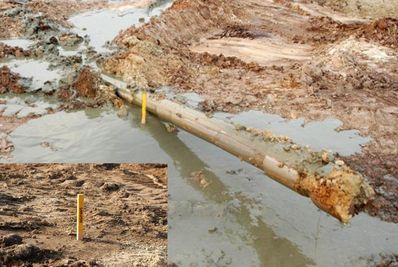
Figure 1-The marking of the exit point followe by the punch out of the pilot drilling
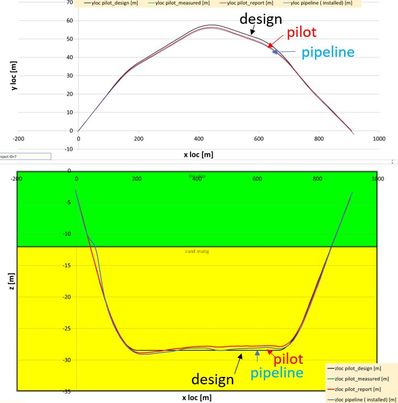
Figure 2 -The design drilling line, the measured pilot drilling line and the final pipeline location