




Trenchless Technology involves the installation or rehabilitation (replacement, renovation or repair) of underground utilities with minimum excavation and surface disruption. Several construction methods are classified as trenchless. See the Trenchless Technology page for details. Trenchless methods, by definition, are mainly used in civil engineering; however, certain methods like pipe lining can also be applied to pipes in buildings and processing plants. Trenchless technologies are and have been used successfully for all underground utilities, from water, sewer, gas, and industrial pipelines to electrical and fibre optic cables and conduits.
Trenchless technologies are a particularly attractive construction option in urban areas with heavy vehicular and pedestrian traffic and numerous existing underground utilities. Trenchless methods are also preferred options for crossing roadways, railways, rivers and waterways. Trenchless techniques are also most suitable to install, rehabilitate or replace utilities located in environmentally and ecologically sensitive areas and locations where surface access may be restricted due to the existence of structures or vegetation.
Often, trenchless methods are the only viable construction option. Trenchless techniques are also often the least costly option as well as the least disruptive when compared to traditional open trenching.
Advantages of trenchless technology methods include:
Less Disruption
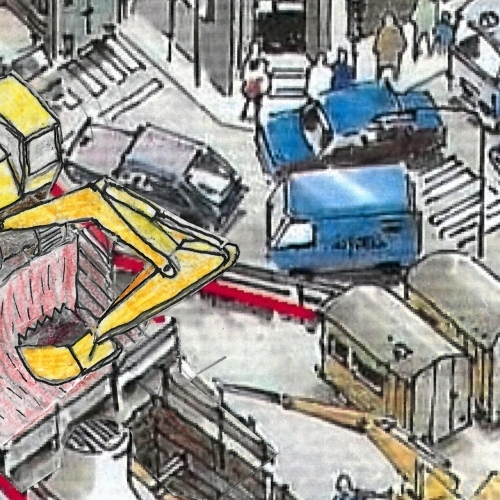 |
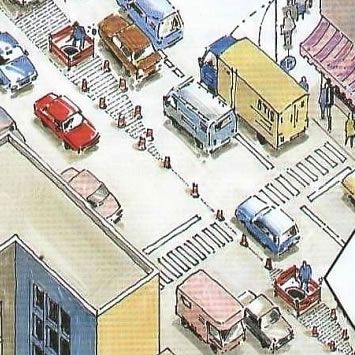
Reduced vehicular traffic disruptions With trenchless construction, the work can be done with minimal disturbance to traffic, whereas with open cut methods, it is likely that lanes or roads would need closing and traffic rerouted leading to confusion, delays and driver frustration. This also impacts on the rerouting of pedestrian traffic and associated safety concerns. |
|
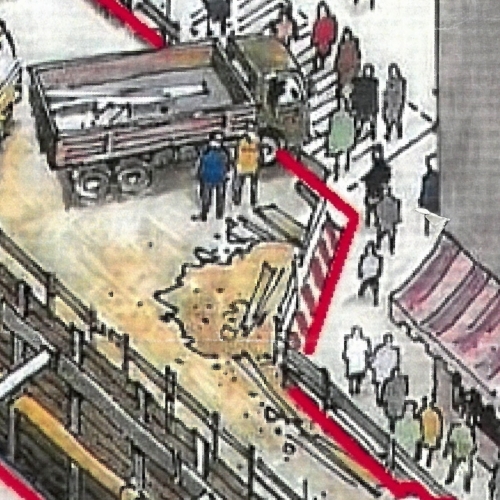
Reduced pedestrian disruptions With trenchless construction, new utilities can be installed, or existing ones rehabilitated without disrupting pedestrian movement on the surface. |
 |
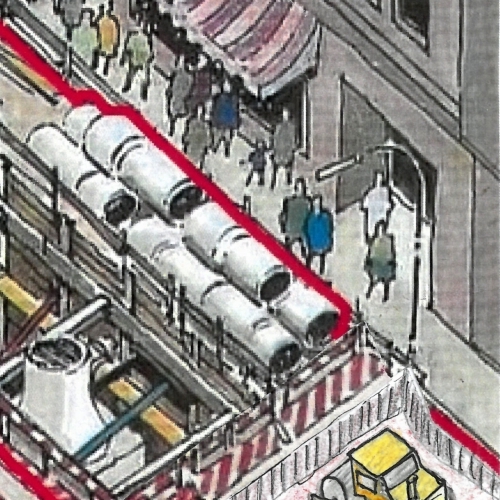 |
Property access restrictions Following on from considerations of vehicular and pedestrian traffic, there will be less interruptions of business and houses accesses with trenchless construction. |
|
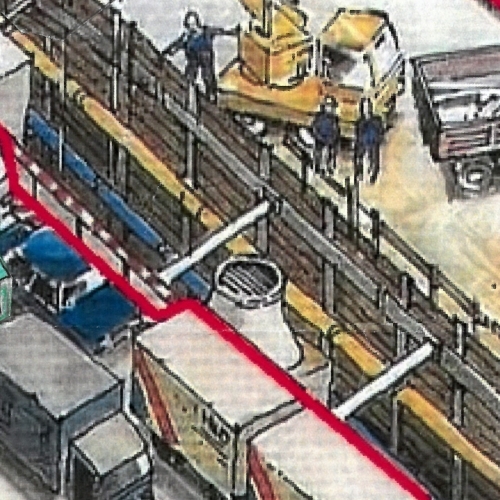
Disruption of utility services With conventional open excavations there is always a potential of existing utility services becoming damaged, requiring deviation or special measures to protect them. With trenchless methods this danger can be considerably reduced. |
 |
 |
Less reinstatement With trenchless construction there is significantly less reinstatement of pavements, surface finishes, landscaping and street furniture which is time consuming and costly. Reinstatement of trenches often spoils the overall road surface integrity and can cause severe and permanent damage to the overall road structure. |
|
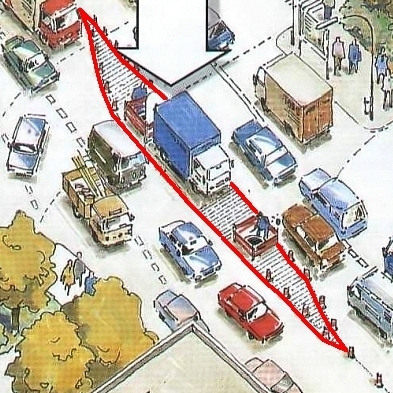
Smaller work area The physical footprint of trenchless construction is considerably less than that using open excavation and accounts for the greatly reduced impact of the construction. |
 |
Less effect on drainage
Conventional open excavation construction interferes with the normal surface drainage of rainfall runoff and must be taken into consideration and planned for to avoid flooding and the consequential inconvenience. This impact is substantially reduced or avoided using trenchless methods.
Environmental Impacts
Minimal Environmental Impact
Beyond the minimal footprint with trenchless, it’s also the preferred choice for crossing under rivers, streams, wetlands, coastal shorelines and other environmentally sensitive areas. With much reduced or avoided excavations, trenchless construction produces minimal soil disturbance and preserves vegetation.
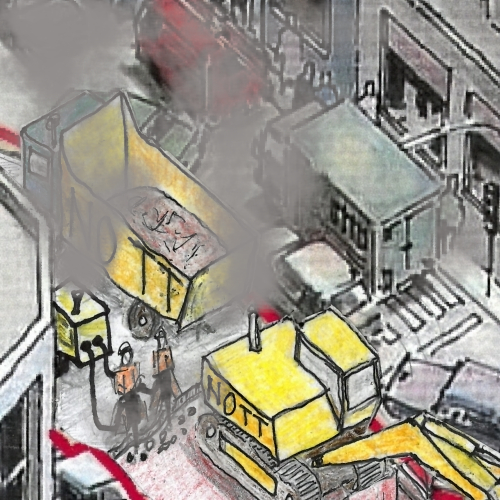 |
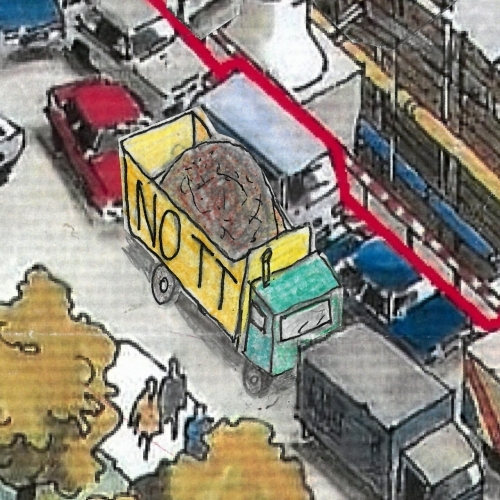
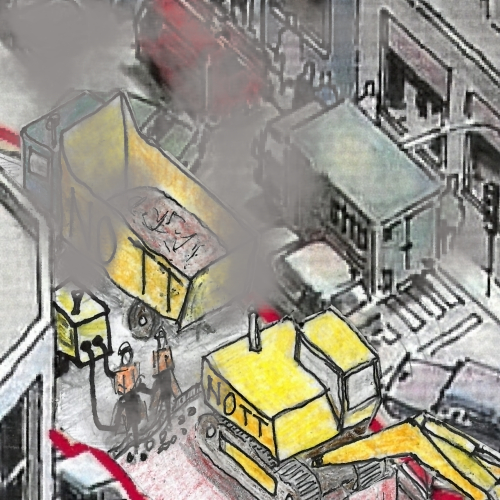
Air Pollution The conventional pipeline construction method requires considerably more motorised equipment than trenchless, where excavation machinery, compaction equipment and trucks to transport excavated and backfilling materials, become mostly unnecessary. Less engine emissions and dust created. |
|
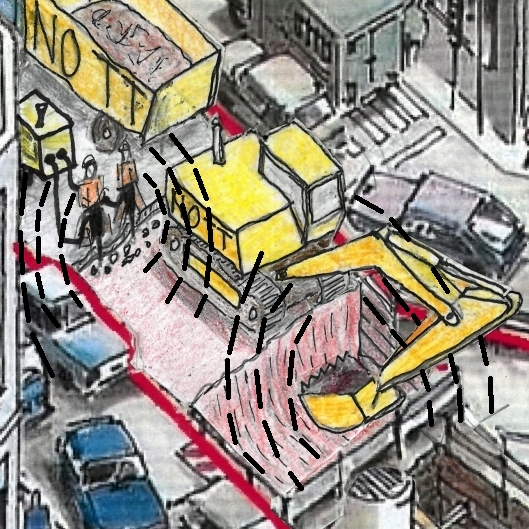
Noise Pollution Trenchless construction is a relatively quiet method of working compared to the noise generated by excavation plant, compaction equipment and jackhammers, associated with conventional construction. |
 |
 |
Less Waste Traditional excavation methods often result in large amounts of soil, debris, and pavement being dug up and removed, leading to considerable waste. With trenchless technology, usually only small entry and exit points are necessary. This not only saves landfill space but also lowers the need for raw materials required for pipe bedding and trench backfilling and promoting more sustainable waste management. |
|
Carbon Footprint Construction activities lead to engine emissions through the use of equipment, machinery and vehicles. With trenchless construction the reduced use of emission emitting equipment will result in lower carbon emissions (less traffic congestion during construction, shorter construction time, and reduced transportation of spoil and backfill materials). |
 |
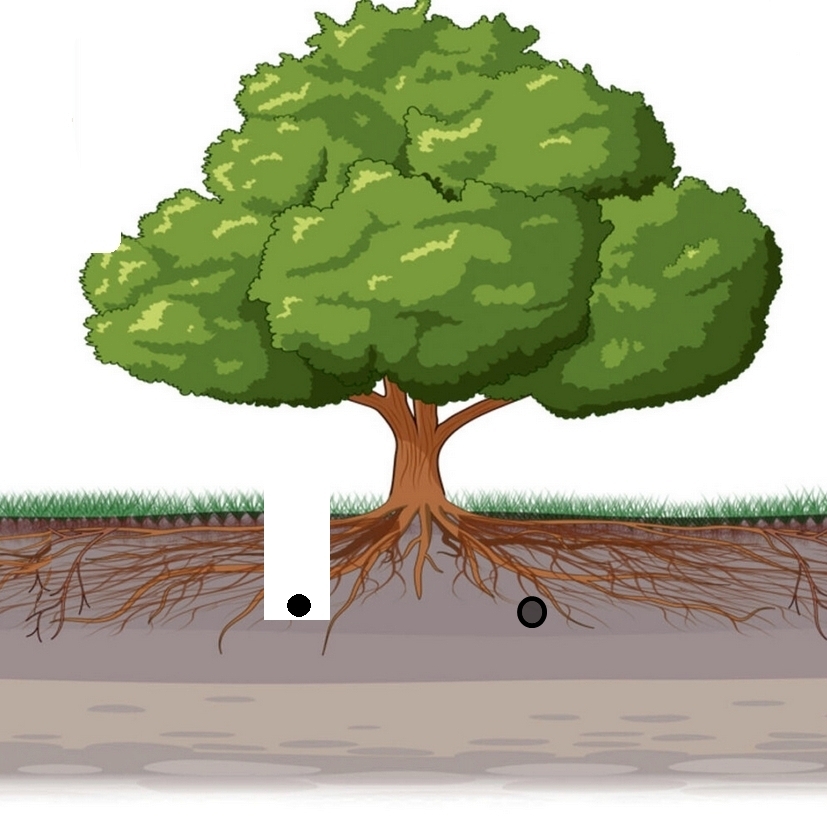 |
Damage to tree roots Trenched excavations through the root zones of trees can severely damage the trees by impacting their water and nutrient uptake and possibly affecting the trees’ stability. The use of trenchless methods can prevent this issue entirely for pipe rehabilitation and substantially reduce the impact for pipe installations. |
Other
|
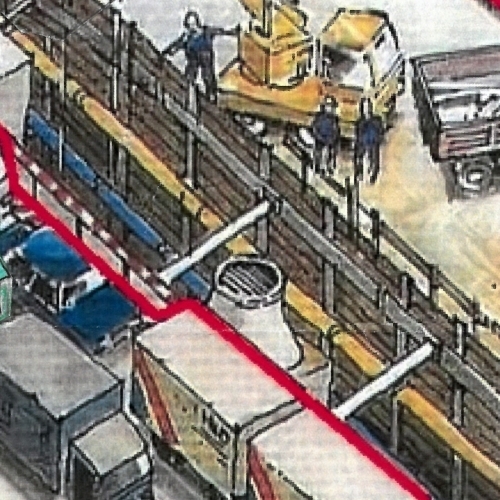
Safer Trenches and open excavations can be dangerous for both workers and the public if not correctly safeguarded and monitored. Whereas with trenchless methods there are minimal open excavations involved and a lot less soil moved, making the construction much more manageable from a safety aspect. |
 |
Quicker
The construction production rate of trenchless is considerably higher than for conventional construction, where the excavation, shoring, transportation or storage of excavated material, installation of pipes and then replacement of the backfill with compaction, is a sequential and labour and equipment intensive operation. Conventional construction with open trenches is more affected by subsurface water, poor subsoil conditions or adverse weather conditions, leading to delays. Trenchless construction is much less susceptible to the risk of unexpected underground hazards (rocks, clay, water).
 |
Effect of depth The deeper the pipe, the greater the cost and duration of conventional construction. The pipe depth has a much lesser effect on trenchless construction. |
Route versatility
The alignment of new trenchless installations need not be limited to existing corridors but can be designed along innovative alignments to avoid physical barriers or to take short cuts.
Trenchless as a preferred method
More and more, local authorities are realising the benefits of prescribing that pipeline installation and rehabilitation is performed using trenchless methods. The approval processes are simpler and lane rental requirements are avoided.
Lower Overall Cost
Usually trenchless technology construction methods are less expensive than open cut excavation methods, by reducing costly excavations, surface reinstatements and relocating of utilities. In addition, trenchless methods significantly reducing overall costs by not inhibiting commercial activity in the area and by reducing environmental and social impacts, as described in the advantages above. The following section describes this more fully.
Cost Advantages
The costs associated with pipeline construction/rehabilitation/replacement can be categorised into direct, indirect and social costs which all have a significant impact on the overall cost of the project.
- Direct Costs are those costs paid by the utility owner and are most often associated as construction costs and the consultant/professional team costs.
- Social and Indirect Costs – It has long been accepted that open excavation can cause major disruption to commerce and to the general public. Therefore, a key advantage of “trenchless” construction methods is the ability to install new and rehabilitate existing underground assets with limited disruption to traffic and business activities, reduced damage to existing paved surfaces, fewer adverse environmental impacts and less disruption to normal life patterns of the people living, working and shopping around the construction zone.
- Indirect costs are primarily those costs borne by the owner as a result of the project activities but are not part of the construction costs. These include costs such as compensation for contingent damage to property, livelihood restoration costs, and compensation claims by affected persons.
- Social costs, on the other hand, are the quantifiable and unquantifiable costs associated with the construction works that are paid for by the community at large, and not realized as a cost that is included in the tendered contract price such as traffic delays, business disruptions (loss of trade), accident costs, restricted property access, pollution, service disruptions, environmental impact, annoyances, lower quality of life (windblown sand, dust and noise), etc.
Although the existence of these social and indirect costs has been recognized to be part of undertaking construction projects, they are rarely accounted for within project estimates during the planning stages because they are difficult to estimate using standard estimating methods. Studies indicate that social costs are significant and can sometimes equal or even exceed the direct construction costs.
Trenchless methods mitigate against most indirect and social costs and are a better option from a social cost point of view as the impact intensity is much lower for trenchless methods compared to conventional open excavation methods.
Trenchless technology construction costs and overall project costs are often less than that of open excavations, and trenchless methods are more socially acceptable.
|
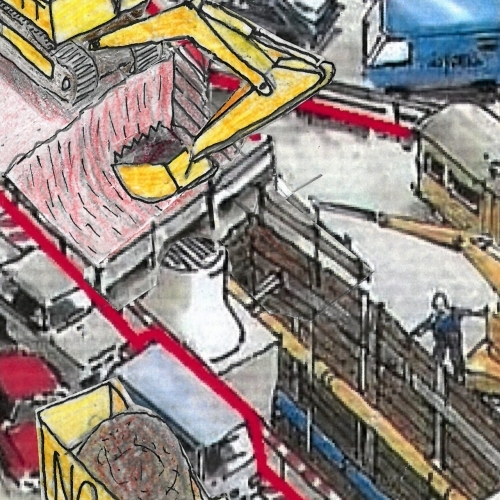
TRENCHED 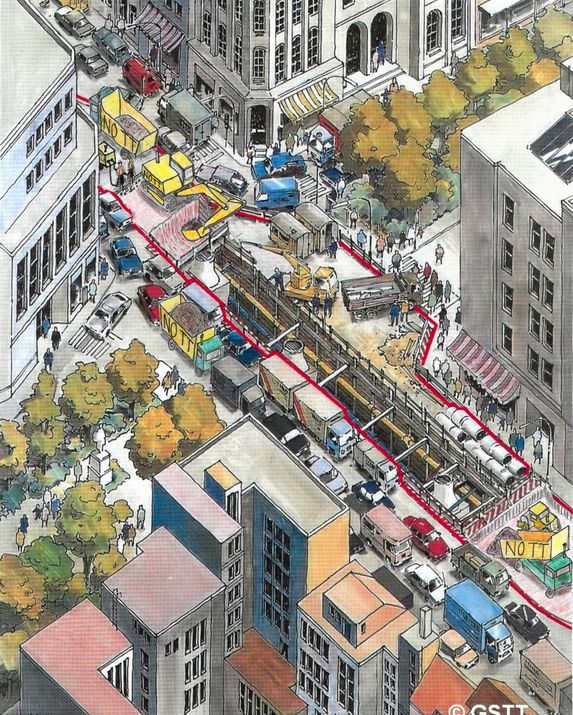 |
TRENCHLESS 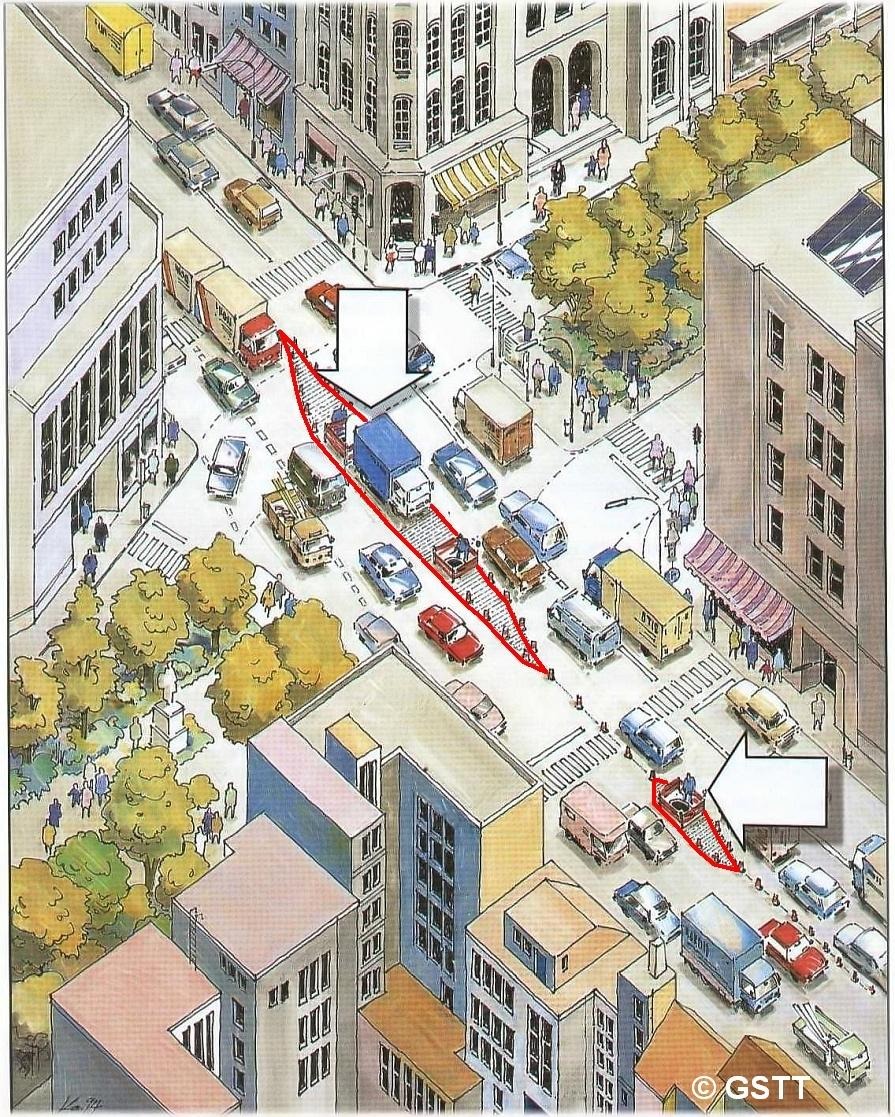 |