




What is Trenchless?
Trenchless Technology involves the installation or rehabilitation (replacement, renovation, or
repair) of underground utilities with minimum excavation and surface disruption. Several
construction methods are classified as trenchless. See the Trenchless Technology page for
details. Trenchless methods, by definition, are mainly used in civil engineering, however
certain methods like pipe lining can also be applied to pipes in buildings and processing
plants. Trenchless technologies are and have been used successfully for all underground
utilities from, water, sewer, gas, and industrial pipelines to electrical and fibre optic cables
and conduits.
Trenchless technologies are a particularly attractive construction option in urban areas with
heavy vehicular and pedestrian traffic and numerous existing underground utilities.
Trenchless methods are also preferred options for crossing roadways, railways, rivers, and
waterways. Trenchless techniques are also most suitable for installing, rehabilitating, or
replacing utilities located in environmentally and ecologically sensitive areas and locations
where surface access may be restricted due to the existence of structures or vegetation.
Often, trenchless methods are the only viable construction option. Trenchless techniques are
also often the least costly option as well as the least disruptive when compared to traditional
open trenching.
Download all the images from ⬇️HERE.
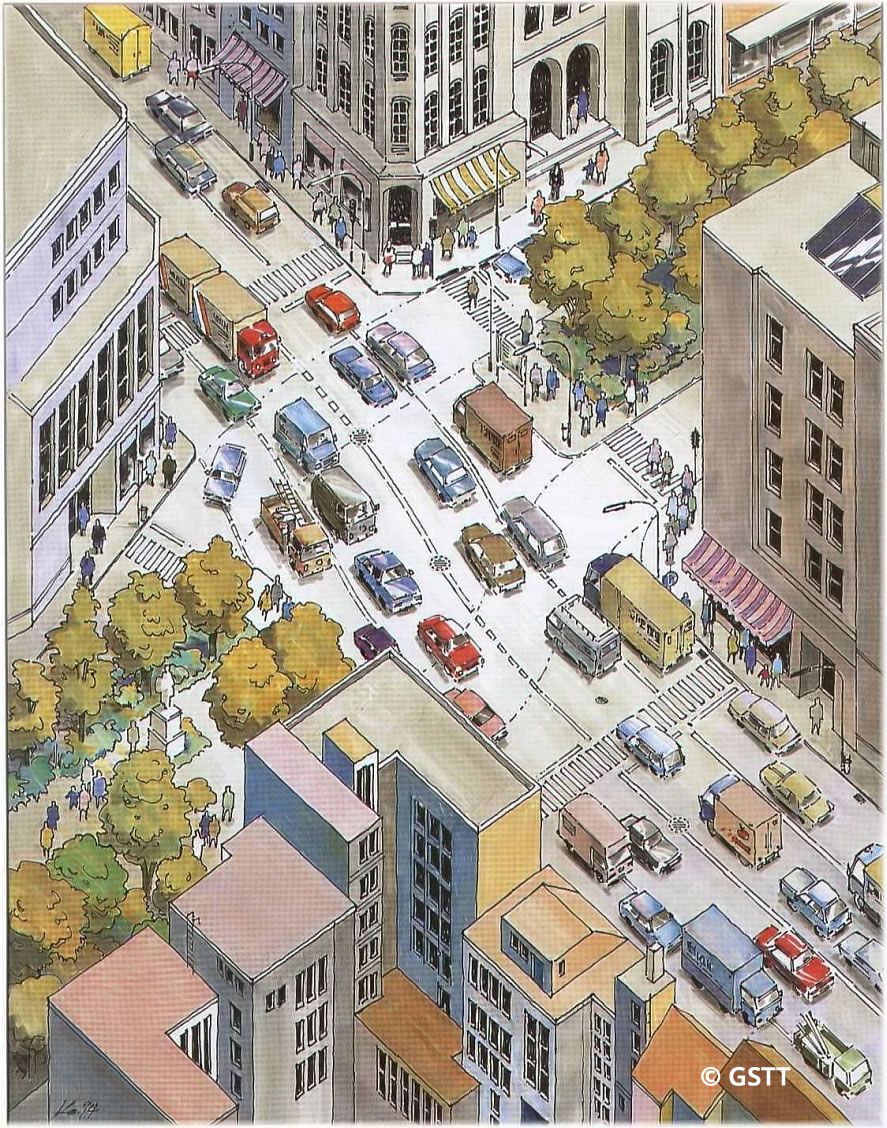 |
1) Here is a typical city junction. Note how the traffic is flowing normally. |
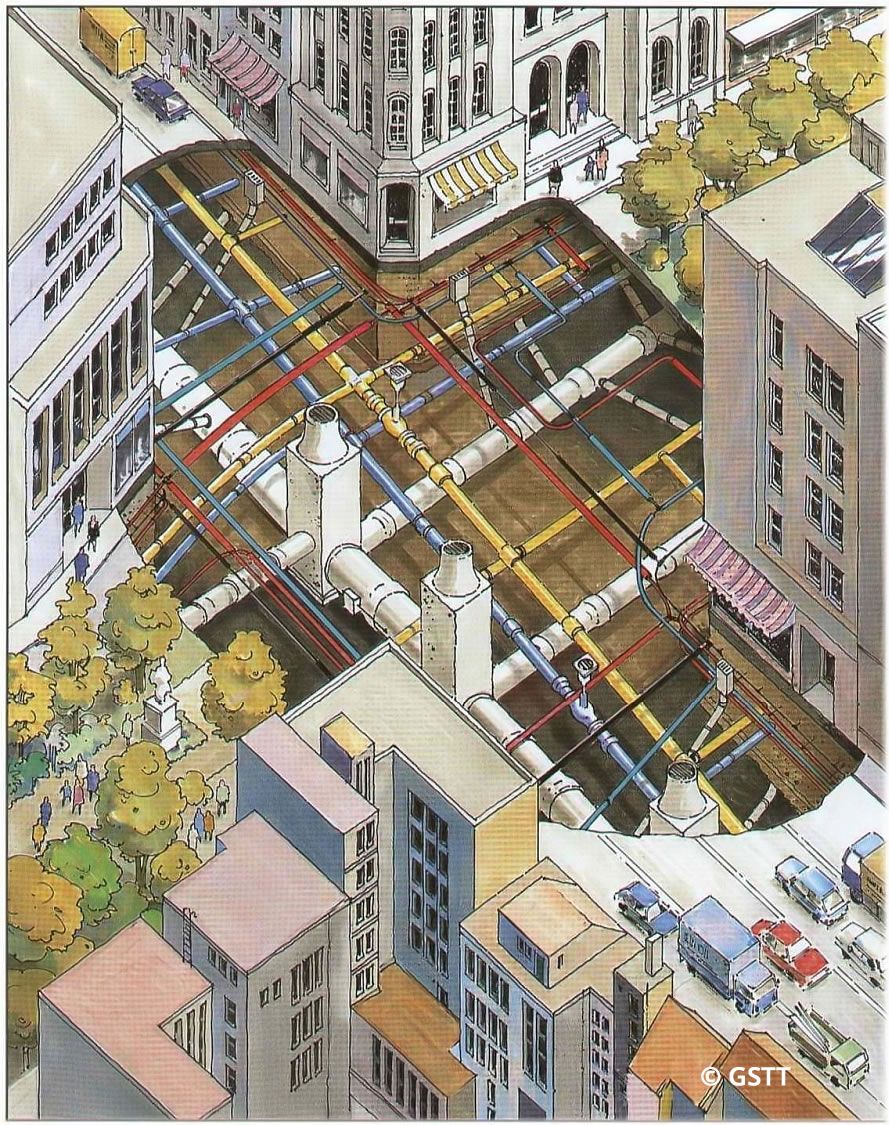 |
2) But look at the unseen 'traffic', water, wastewater, gas, electricity, and telecommunication, which are also using the junction. |
|
|
3) Now dig it up to work on this other traffic! |
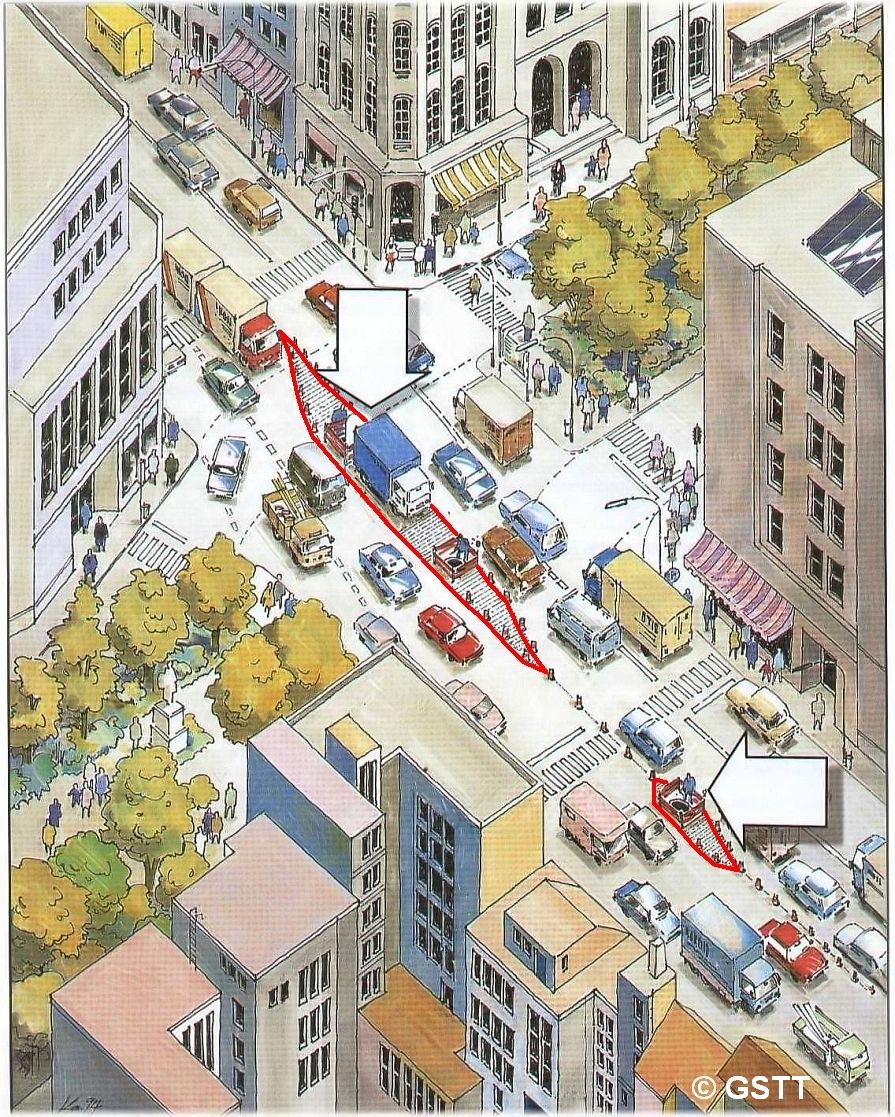 |
4) Here is the same repair being undertaken using Trenchless Technology. No problem for the road traffic! No problem for the city people! So why 'dig' when there is No-Dig? |
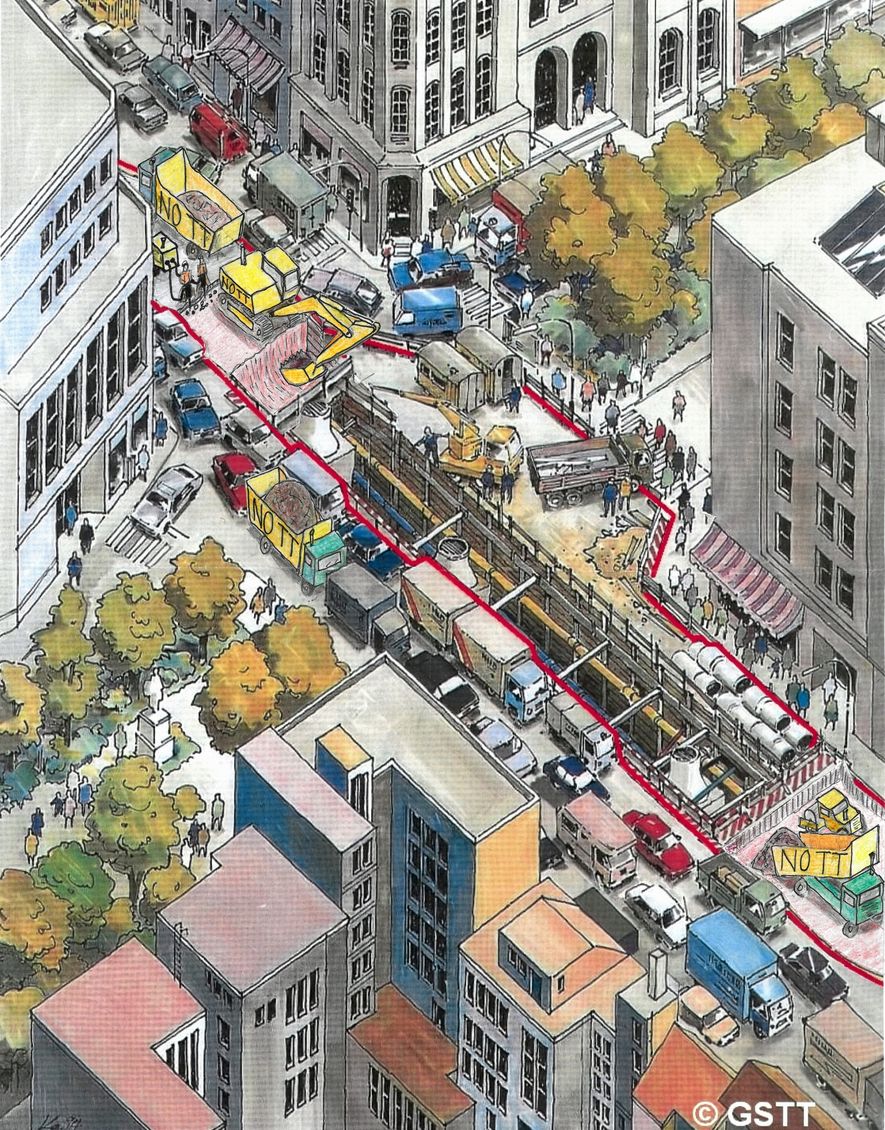
Every day, thousands of kilometres of roads are blocked by road works, millions of litres of fuel are wasted, air is polluted, accidents occur, buildings are damaged, and people suffer. But wait just a second. Look again. Did you notice those covers in the road? If there are access points to the underground networks why not use them?